Highlights
- Scenic mountain flights between Kathmandu – Nepalgunj – Juphal offering breathtaking Himalayan views.
- Discover the Shey Phoksundo National Park, Nepal’s largest protected area with diverse flora and fauna.
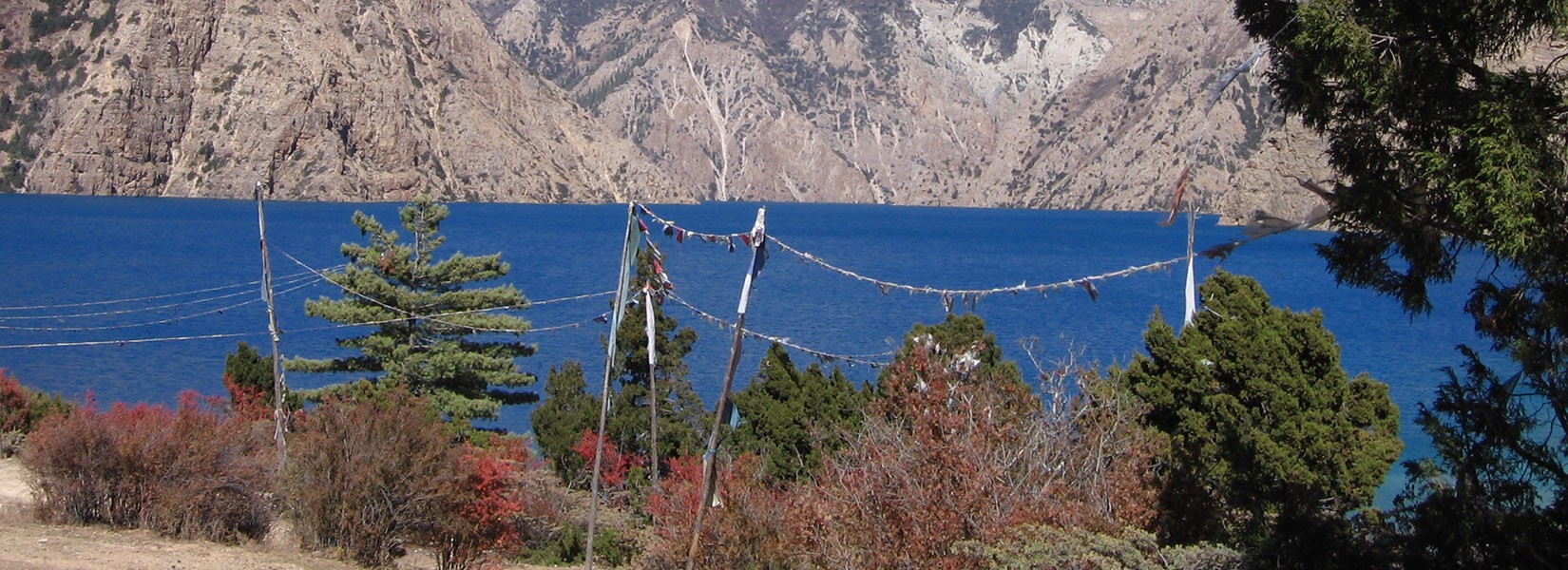
- Visit Shey Phoksundo Lake, one of Nepal’s most iconic and pristine natural wonders.
- Explore Ringmo Gaon, an ancient Bon-Buddhist village with traditional stone houses and cultural depth.
- Walk through pine, oak, juniper, and bamboo forests along tranquil river valleys.
- See the dramatic Phoksundo Waterfall, one of Nepal’s tallest and most picturesque cascades.
- Experience authentic Dolpo culture, untouched landscapes, and rare wildlife such as the Himalayan blue sheep or musk deer.
- A moderate trek ideal for those wanting a remote Himalayan experience without extreme altitude.
About Lower Dolpo Trek (Short) - 11 Days
The Lower Dolpo Trek is one of Nepal’s most rewarding and least-explored journeys — a true adventure into the heart of the Himalayas where time seems to stand still. Nestled between the Dhaulagiri range and the Tibetan Plateau, Dolpo remains an untouched sanctuary of ancient Tibetan Buddhist culture, arid mountain deserts, and deep turquoise lakes.
This trek takes you through rugged landscapes, wild forests, high cliffs, and remote settlements that still preserve their centuries-old traditions. The highlight of the trek is the mesmerizing Shey Phoksundo Lake (3,640 m) — Nepal’s deepest and most beautiful alpine lake — surrounded by dramatic cliffs and glacial valleys.
The journey begins with a scenic flight to Nepalgunj and then on to Juphal, the gateway to Dolpo. From there, the trail passes through Dunai, Chhepka, and picturesque villages to reach Ringmo Gaon by Phoksundo Lake. You’ll experience authentic Bon and Tibetan Buddhist culture, ancient monasteries, and unique local hospitality — all within a landscape that feels like another world.
The Lower Dolpo Trek is perfect for trekkers seeking solitude, adventure, and cultural immersion far from the crowded trails of the Everest or Annapurna regions.
Tips & Ideas
Best Time to Trek
The Lower Dolpo Trek is best undertaken between late April to October, when the region’s weather is relatively dry and stable. Being in the rain-shadow area of the Himalayas, Dolpo experiences much less rainfall compared to other regions of Nepal.
Spring (April–June): Clear skies, blossoming rhododendrons, and pleasant temperatures make it ideal for trekking and photography.
Autumn (September–October): The air is crisp, visibility is excellent, and it’s the most popular time for Dolpo treks.
Monsoon (July–August): Still possible due to the rain shadow effect, though flights may sometimes be delayed.
Winter (November–March): Trekking becomes difficult due to snow at higher passes and limited accessibility.
Trek Difficulty
The Lower Dolpo Trek is graded as moderate to strenuous. While it doesn’t reach extreme altitudes like Upper Dolpo or Everest, trekkers should be in good physical shape and prepared for long days of walking (5–7 hours daily) over rugged terrain and high passes exceeding 3,500 meters. Previous trekking experience at altitude is recommended but not mandatory.
Altitude and Acclimatization
The maximum altitude reached is around 3,640 m (Phoksundo Lake). The trek itinerary allows gradual ascent for safe acclimatization. Even so, it’s important to:
Stay hydrated by drinking plenty of water.
Avoid alcohol and smoking during the trek.
Ascend slowly and listen to your body — report any symptoms of altitude sickness to your guide.
Accommodation
Accommodation during the trek is primarily in local teahouses and lodges operated by Dolpo villagers.
Expect simple yet cozy rooms with basic bedding (bring a warm sleeping bag).
Shared toilets are the norm, and hot showers may be available at extra cost in some places.
In Kathmandu and Nepalgunj, comfortable hotels with modern amenities will be arranged.
Meals
All meals are provided during the trek.
Typical trekking meals include Dal Bhat (rice, lentil soup, and curry), noodles, potatoes, pasta, eggs, and seasonal vegetables.
Meat is available in some places, though it’s advisable to eat vegetarian meals at higher altitudes for better digestion.
Drinking water can be refilled at lodges; it’s best to use purification tablets or filters for safety.
Transportation and Flights
Kathmandu–Nepalgunj: 1-hour scenic flight.
Nepalgunj–Juphal: 30-minute mountain flight offering breathtaking views.
Flight schedules in Dolpo are highly weather-dependent, so an extra buffer day is recommended to accommodate potential delays.
Private transportation is used for airport transfers and local travel.
Permits Required
Lower Dolpo is a restricted trekking area, so special permits are required:
Lower Dolpo Restricted Area Permit (RAP) – issued by the Department of Immigration.
Shey Phoksundo National Park Entry Permit.
TIMS Card (Trekkers’ Information Management System).
All permits will be arranged by Hikers Haven, and your guide will handle all entry formalities during the trek.
Guides and Porters
A licensed English-speaking trekking guide and local porters will accompany you throughout the journey.
Guides are well-trained in first aid, altitude safety, and local culture.
Porters carry up to 15–20 kg per person, allowing you to trek comfortably with just a light daypack.
Communication
Dolpo remains remote with limited mobile connectivity.
Ncell/Nepal Telecom networks work in some lower villages, but expect long stretches without signal.
Guides will have access to satellite phones for emergency communication.
Wi-Fi is generally not available beyond Dunai.
Electricity and Charging
Electricity is available in most villages, usually through solar panels or small hydro systems.
Charging electronic devices often incurs a small fee.
Carry extra power banks or solar chargers for cameras, phones, or headlamps.
Money and Payments
ATMs and banks are available only in Kathmandu and Nepalgunj.
Once you enter the trekking region, all transactions are in cash (Nepali Rupees).
Bring enough small denominations for personal expenses, snacks, and tips.
Health and Safety
A first aid kit and oximeter are carried by the guide.
Trekkers are required to have comprehensive travel insurance covering emergency evacuation up to 4,000 meters.
Emergency helicopter evacuation can be arranged through your insurance provider if necessary.
Responsible Tourism
Hikers Haven emphasizes Leave No Trace principles and community-based tourism:
Carry all non-biodegradable waste back to Kathmandu.
Respect local customs, traditions, and monasteries.
Buy locally whenever possible to support Dolpo’s economy.
Trekking Equipment List
Clothing
Base layers (moisture-wicking tops and bottoms)
Insulating mid-layers (fleece or down jacket)
Waterproof and windproof outer shell (Gore-Tex jacket/pants)
Lightweight trekking pants and T-shirts
Thermal underwear (for higher altitudes)
Warm hat, gloves, and buff or neck gaiter
Sun hat or cap
Hiking socks (4–5 pairs) and liner socks
Sturdy trekking boots (well broken-in)
Camp shoes or sandals
Gear and Accessories
Sleeping bag (comfort rated to -10°C or below)
Trekking poles
Daypack (30–40L) with rain cover
Duffel bag (for porters, provided by Hikers Haven)
Headlamp with extra batteries
Sunglasses (UV protection)
Water bottles and purification tablets/filter
Quick-dry towel
Personal toiletries and wet wipes
Sunscreen and lip balm (SPF 30+)
Insect repellent
Personal and Miscellaneous
Personal first aid kit and medicines
Reusable bag for waste
Camera or smartphone for photos
Power bank or solar charger
Snacks or energy bars
Passport copies, permits, and insurance documents (waterproofed)
Optional but Recommended
Frequently Asked Questions (FAQs)
1. How difficult is the Lower Dolpo Trek?
The trek is moderate, with daily walks of 5–6 hours. No technical climbing is required, but a good level of fitness is essential due to remote terrain.
2. Do I need prior trekking experience?
While not mandatory, some trekking experience in Nepal or high-altitude areas is beneficial.
3. What kind of accommodation can I expect?
Accommodation is basic yet comfortable — mainly local tea houses or homestays with shared facilities.
4. Is the Dolpo region safe for trekking?
Yes, it is very safe. The local people are welcoming, and our guides are well-trained for remote area operations.
5. Are there flight delays to Juphal or Nepalgunj?
Weather in Dolpo can occasionally cause flight delays. We recommend keeping 1–2 buffer days in your travel plan.
6. What should I pack for this trek?
Warm clothing, a sleeping bag, trekking boots, waterproof gear, sunscreen, and a good-quality daypack are essential.