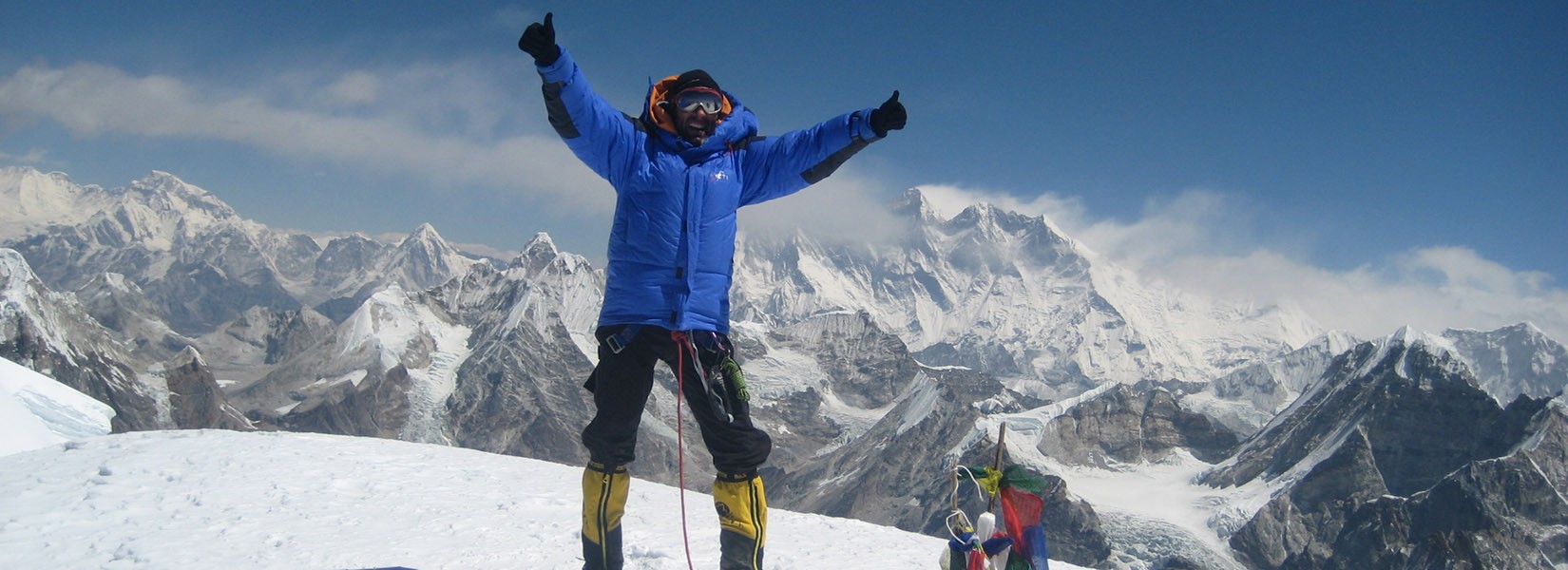
Highlights
Summit Mera Peak, Nepal’s highest trekking peak (6,476 m / 21,247 ft)
Trek through dense alpine forests and remote Sherpa villages
Experience Sherpa culture and visit ancient monasteries along the trail
Cross suspension bridges and rivers while enjoying pristine Himalayan scenery
Climb across Mera Glacier with pre-summit mountaineering training
Witness panoramic views of Everest, Lhotse, Makalu, Cho Oyu, and Ama Dablam
Cross Zatrwa La Pass and explore high-altitude landscapes
About Mera Peak Climbing
Mera Peak Climbing (6,476 m / 21,247 ft) is the highest trekking peak in Nepal, offering a perfect blend of adventure trekking and moderate alpine climbing. This 18-day expedition takes you through remote Sherpa villages, dense rhododendron and pine forests, high-altitude glaciers, and breathtaking Himalayan landscapes. The climb follows the Mera Glacier, gradually ascending from Khare (5,045 m / 16,552 ft) to Mera La (5,415 m / 17,759 ft) and Mera High Camp (5,780 m / 18,963 ft) before summiting Mera Peak.
Along the route, trekkers experience the rich culture of the Sherpa people, ancient monasteries, prayer flags, and stunning views of five of the eight-thousanders, including Everest, Lhotse, Makalu, Cho Oyu, and Ama Dablam. Pre-summit training is provided by experienced Sherpa guides, ensuring climbers are equipped with the skills and confidence for a safe ascent. This expedition is ideal for adventure seekers who want a challenging yet non-technical high-altitude climbing experience in the Himalayas.
Outline Itinerary
Detail itinerary Day 01Arrival in Kathmandu (1,400m / 4,593ft)
Day 02Fly to Lukla (2,840m / 9,318ft) and trek to Paiya (2,730m / 8,957ft)
Day 03Trek to Panggom (2,846m / 9,337ft)
Day 04Trek to Ningsow (2,860m / 9,383ft)
Day 05Trek to Chhatra Khola (2,800m / 9,186ft)
Day 06Trek to Kothe (3,691m / 12,109ft)
Day 07Trek to Thangnak (4,358m / 14,297ft)
Day 08Trek to Khare (5,045m / 16,552ft)
Day 09Acclimatization and pre-climb training at Khare (5,045m / 16,552ft)
Day 10Trek to Mera High Camp (5,780m / 18,963ft)
Day 11Summit Mera Peak (6,476m / 21,247ft) and return to Khare (5,045m / 16,552ft)
Day 12Reserve/Contingency Day for Summit
Day 13Trek to Kothe (3,691m / 12,109ft)
Day 14Trek to Thuli Kharka (4,300m / 14,107ft)
Day 15Trek to Lukla via Zatrwa La Pass (4,600m / 15,091ft)
Day 16Fly back to Kathmandu (1,400m / 4,593ft)
What’s Included
Included
- Airport pickup upon arrival at Kathmandu airport by private vehicle
- Airport departure drop off to Kathmandu airport by private vehicle
- 2 night accommodation on twin sharing basis in Kathmandu with breakfast.
- Food and accommodation during trekking in lodges / teahouses/ Tent (twin sharing basis)
- Flight (Kathmandu - Lukla - Kathmandu) or (Ramechhap Lukla Ramechhap)
- English Speaking Trekking Guide,(leader) and Climb guide(leader) with insurance for our Nepali staff
- Trekking permits and Island peak Climbing permit
- Duffel bag (to be returned after trip completion), T-shirt, and Trekking Map
- Good quality tent and kitchen utensils for camping
- Daily seasonal fresh fruits after dinner
- A first Aid kit carried by the guide(Oximeter to measure your oxygen saturation level and pulse in high altitude)
- Group mountaineering(climbing)equipment
- TIMS (trekking registration card)
- Everest region trekking map
- All government taxes and Service from our office in Kathmandu
Optional
- Kathmandu Lukla Heli USD 350 ( subject to change)
- Lukl to Kathmandu Heli USD 350 (subject to change)
- Porter: Per porter: USD 300
Not Included
- International Flight Ticket and Nepalese Visa fee
- Meal in Kathmandu
- Drinks during the trek
- Extra Baggage charges
- Meals and drinks in Kathmandu
- Extra night hotel in Kathmandu in case of early arrival, late departure, and early return from the trek(due to any reason) then the schedule itinerary
- Personal insurance and other personal expenses (WiFi, phone calls, laundry bills, Batteries recharges, hot shower, Tea and coffee)
- Travel and rescue insurance
- Tips for trekking staff and driver (tipping is expected)
Tips & Ideas
Difficulty Level
Mera Peak is graded as Alpine PD (Peu Difficile / slightly difficult). The climb requires physical fitness, stamina, and some trekking or mountaineering experience. It is not highly technical but involves glacier travel, crevasse navigation, and high-altitude challenges. Proper acclimatization and fitness preparation are essential.
Altitude-related precautions:
Drink plenty of water and avoid alcohol or smoking.
Watch for symptoms of altitude sickness: dizziness, nausea, headache, fatigue, difficulty sleeping, or shortness of breath.
Acclimatization days are built into the itinerary to reduce risks.
Best Time to Climb Mera Peak
Spring (March to May): Rhododendrons bloom, weather is stable, and visibility is excellent.
Autumn (September to November): Crisp weather, clear skies, and stunning Himalayan views.
Accommodation & Food
Lodges: Twin-sharing or single rooms along the trekking trail; basic amenities with private or shared bathrooms.
Camps: High Camp and summit areas are in tents. Separate dining, sleeping, and toilet tents are provided.
Meals: Full board while trekking; breakfast only in Kathmandu on arrival. Three meals per day in lodges and camps, with options for Nepali and Western dishes.
Transportation
Domestic flights: Kathmandu ↔ Lukla
Airport transfers: included
Kathmandu sightseeing: private car/van
Trekking & climbing: on foot, with porter support
Electricity & Charging Facilities
Solar or hydro-electric power is available in lodges; high-altitude camps may have limited electricity.
Bring a power bank or solar charger as backup.
Charging fees may apply (USD 2–3 per device).
Luggage
Duffle bag: For main trekking/climbing gear; carried by porters.
Daypack: Carry essentials, snacks, water, and electronics.
Storage: Lockable luggage can be left at the hotel in Kathmandu.
Guide & Crew
Licensed and experienced Sherpa climbing guides.
Porters carry 20–22 kg per pair (10–11 kg per person).
Assistant guides provided for groups of 8 or more.
Guides handle route setting, rope fixes, and ensure safety.
Equipment Provided
Climbing gear: crampons, ice axes, harness, ropes (for summit day).
Sleeping tents, dining tents, and toilet tents at camps.
Trekking poles (optional).
Recommended Personal Gear:
Layered clothing (base, mid, and outer layers)
Insulated down jacket and pants
Waterproof jacket and pants
Gloves, hat, and balaclava
Sunglasses & sunscreen
Sturdy trekking boots and mountaineering boots
FAQs for Mera Peak Climbing
Q: How difficult is Mera Peak?
A: Mera Peak is strenuous but non-technical. Physical fitness and prior trekking experience are essential. Glacier travel, crevasse navigation, and high altitude make it challenging.
Q: Can beginners climb Mera Peak?
A: Yes, if physically fit and prepared. Our pre-climb training equips climbers with necessary skills.
Q: Is altitude sickness a concern?
A: Yes, altitude sickness is possible. Acclimatization days are included, and guides monitor all climbers. Hydration and proper pacing are essential.
Q: What is the best season to climb?
A: Spring (March–May) and Autumn (September–November) are ideal for weather, visibility, and success rate.
Q: Are children allowed?
A: Peak climbing is not recommended for children due to physical and mental demands. Contact us for specific inquiries.